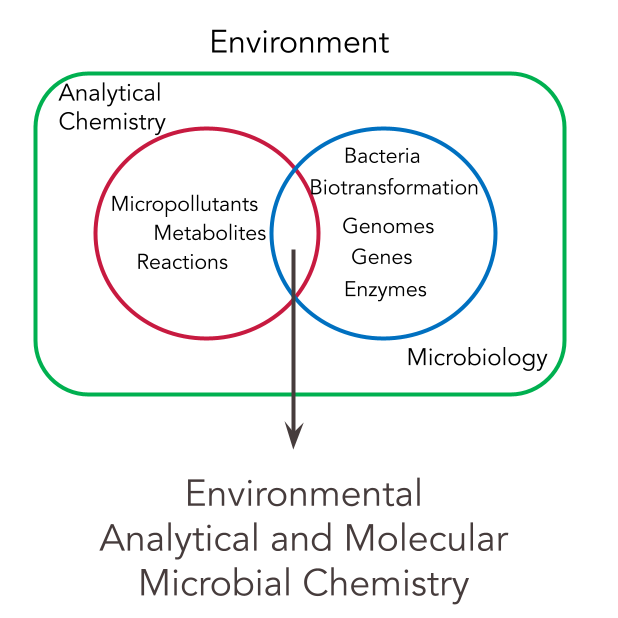
We discover microorganisms that clean up toxic chemicals in the environment — and investigate the genomic mechanisms driving microbial adaptation, resistance, and horizontal gene transfer.
We study how microorganisms interact with synthetic chemicals in the environment — and how these interactions shape microbial evolution, resistance, and ecosystem health.
Based at the Institute of Environmental Sciences, Boğaziçi University, BIOMIG investigates the biodegradation of emerging contaminants (particularly quaternary ammonium compounds), horizontal gene transfer mechanisms, and the development of bioinformatics tools for environmental metagenomics. Our research is supported by TÜBİTAK, Boğaziçi University BAP, and EU CHIST-ERA grants.
Our work spans QAC biodegradation, antimicrobial resistance, environmental genomics, and microbiome engineering.
QxyA, the only known Group V Rieske oxygenase capable of degrading QACs, is studied via protein-ligand docking to identify critical active-site residues and guide protein engineering.
Extracting and analyzing microbial DNA from ancient pottery to reconstruct past microbial communities and trace the evolutionary history of genetic elements across time.
Leveraging microbial communities capable of transforming xenobiotic compounds to develop preventive pregenobiotics against chemical-induced diseases.
A diverse group of researchers united by curiosity about microbial life and its interactions with the chemical environment.


We are looking for enthusiastic researchers interested in:
Or if you have another interesting idea — contact Dr. Ulaş Tezel, submit a CV, or come to talk.
Selected news articles and media coverage of BIOMIG's research.
Interested in collaborating, joining the lab, or learning more about our research?